 Debbie Young
By Debbie Young
Welcome to Part 3 of our “Getting Started as a Childbirth Educator” series! In Part 1 (opens in a new tab), we explored where to teach and working with hospitals. In Part 2, we covered classroom setup, first impressions, and foundational engagement strategies.
Now it’s time to focus on what many educators, and parents, love most: hands-on activities and interactive exercises that make childbirth classes fun, memorable, and confidence-building. This guide is packed with practical activity ideas you can use in your classes right away. Whether you’re just starting out or looking to refresh your approach, these ideas can spark creativity for educators at any stage.
Why Hands-On Activities Matter in Childbirth Classes
People learn best when they experience concepts actively, not just hear about them. For childbirth classes, this is especially true: labor is physical, emotional, and unpredictable. Using props, simulations, and interactive exercises allows students to:
- Practice skills they’ll use during labor and postpartum
- Build confidence for both mothers and support partners
- Connect with each other and create a supportive classroom community
- Retain information more effectively than through lecture alone
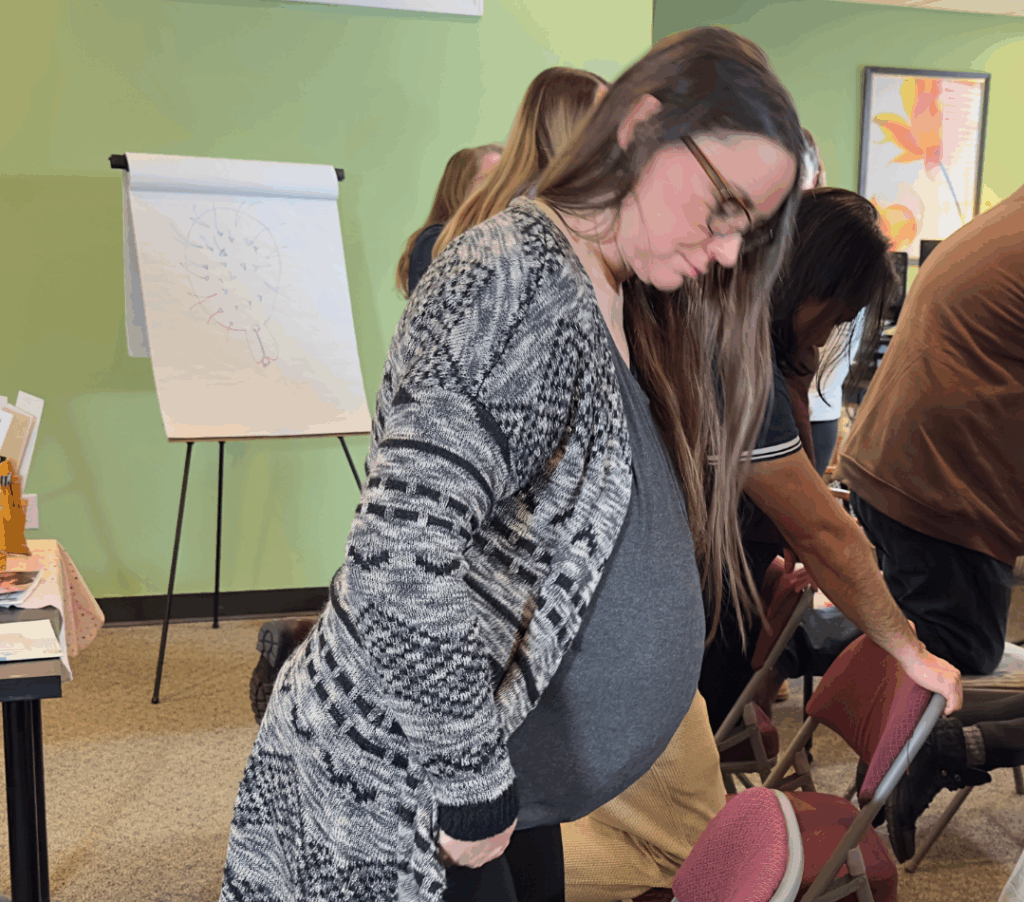
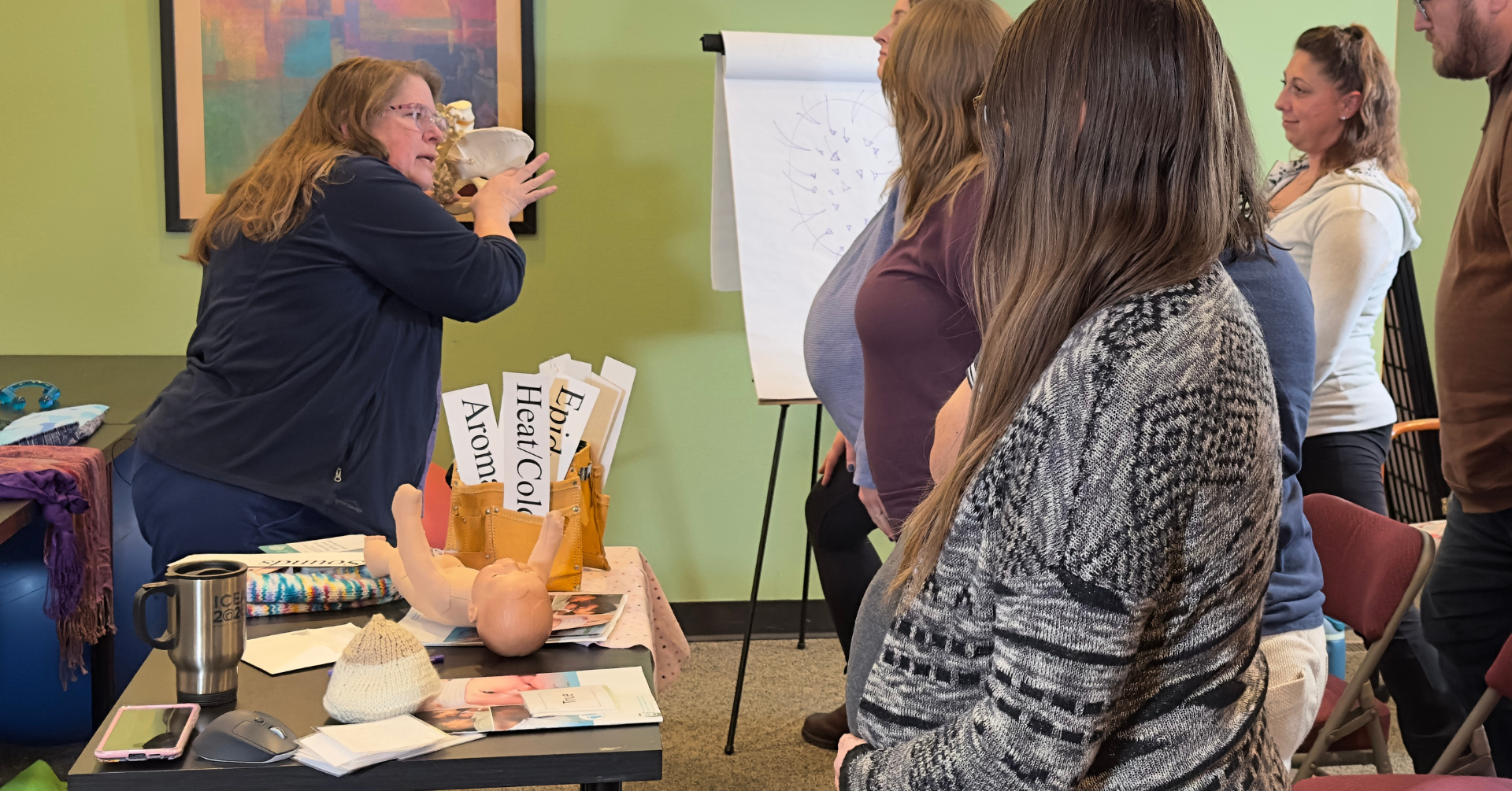
Using Teaching Tools and Props in Your Childbirth Class
I am a big believer in using physical teaching tools and props. Yes, videos and slides are important, but there’s something powerful about hands-on learning that engages multiple senses and creates lasting memories.
Introducing props strategically helps maintain curiosity and engagement.
Here’s a toolkit of commonly used items:
- Pelvis and baby models: Demonstrate fetal positioning, rotations, and labor mechanics
- Baby dolls: Swaddling, diapering, holding, and breastfeeding positioning
- Birth balls: Practice labor positions, comfort measures, and balance techniques
- Massage tools: Handheld massagers, rolling sticks, and textured tools for comfort measure practice
- Rebozo scarves: Teach sifting (gentle rocking), counterpressure, and support techniques
- Peanut balls & positioning aids: Demonstrate alternative labor positions and comfort options
- Breast models: For lactation and breastfeeding demonstrations
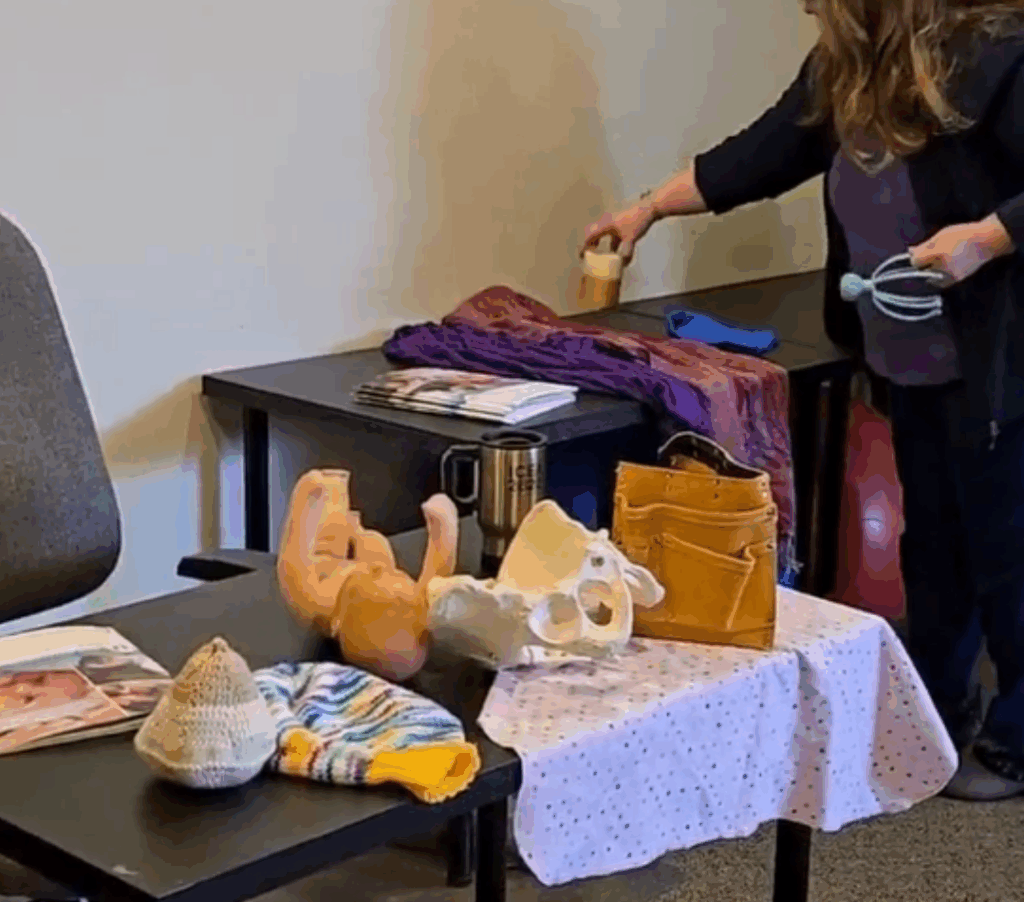
Tip: Introduce props gradually throughout a multi-week series to maintain excitement and prevent overwhelm. For example, save baby dolls and breastfeeding props for the final class to create a memorable hands-on session.
Incorporating Short Video Clips & Authentic Parent Stories for Interactive Learning
Videos and slides aren’t just “lecture tools”—they can be highly interactive when used strategically. InJoy’s PowerPoints (opens in a new tab) and Video Programs (opens in a new tab) are designed to include:
- Short video clips demonstrating real birth scenarios
- Authentic parent stories that normalize a range of experiences
- Visual explanations of stages of labor, positions, and comfort measures
How to use them effectively in class:
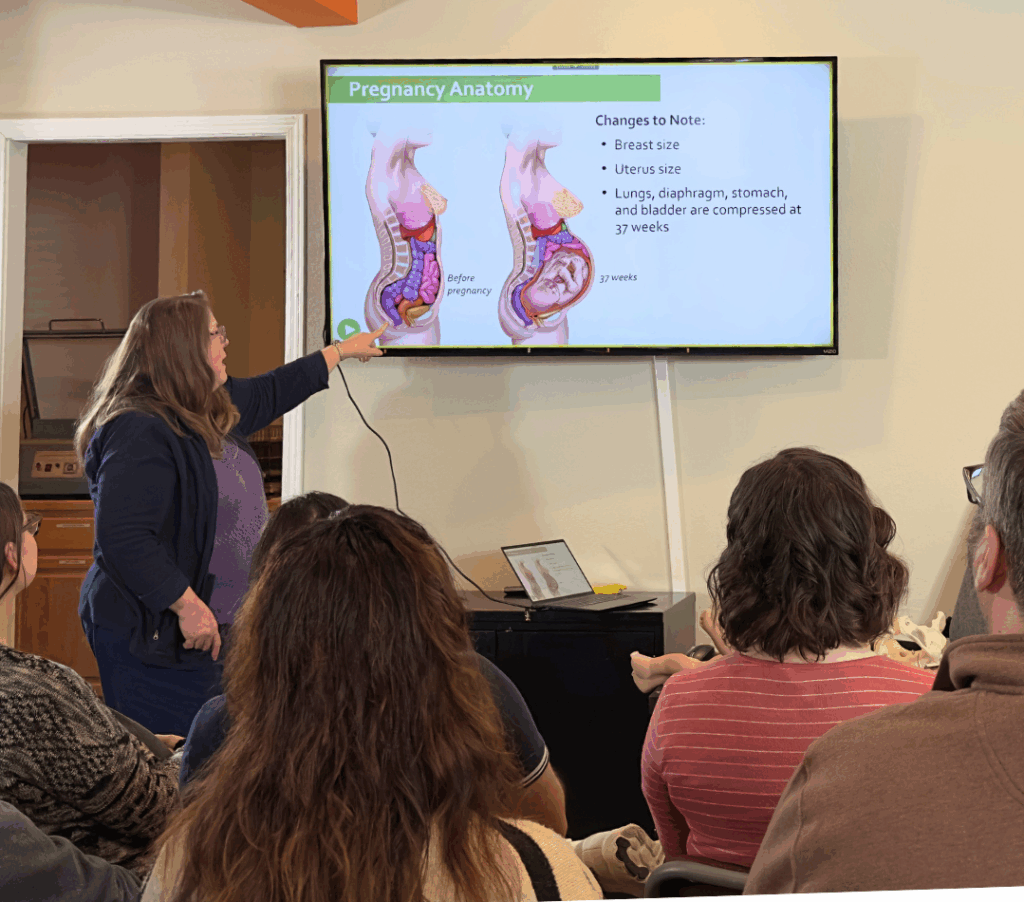
- Break up lecture segments: Instead of a 20-minute slide presentation, show a 3- to–5-minute clip from InJoy’s curriculum, then pause for discussion
Ask: “What did you notice?” or “How would you apply this in your birth plan?” - Connect clips to hands-on practice: After watching a comfort measure or labor position, have couples practice what they just saw using props or each other
- Highlight authentic experiences: Real parent stories help students relate, validate feelings, and spark questions
Example: Show a short clip of a couple using counterpressure during labor, then have students role-play that scenario - Interactive Q&A after clips: Encourage students to reflect and share insights
Ask: “Which strategies stood out to you?” or “How might you adapt this for your own birth experience?”
Tip: Videos are most effective when short, targeted, and paired with active practice. This keeps energy high and prevents passive “screen-watching.”
Childbirth Class Station Ideas: Engaging Learning Activities
Station activities are excellent for hands-on practice, movement, and small group learning. Set up stations around the room and rotate couples or small groups through each.
Example Station Ideas:
- Massage & counterpressure techniques
- Labor positions with birth balls
- Breathing & relaxation patterns
- Comfort measure tools
- Pain management & medication overview
- Swaddling & diapering practice
- Communication & support skills
Tips for Station Success:
- Provide clear instruction cards at each station
- Keep time limits consistent and visible (use a timer)
- Focus on one skill per station to prevent confusion
- Debrief after rotations: “What worked? What felt natural? What surprised you?”
Labor Rehearsals: Scenario-Based Practice for Childbirth Confidence
Labor rehearsals are scenario-based practice sessions where couples work through simulated labor situations together. I typically do these in a large open space where everyone can spread out. This activity is usually 30 or more minutes in my classroom but if we are running low on time, I can do it in 10 minutes.
How it works:
- I call out a scenario: “You’re in early labor at home, contractions are 7 minutes apart”
- Couples practice positions, comfort measures, and support techniques for that phase
- I move through the stages: “Now you’re in active labor, contractions are intense and 3 minutes apart”
- Partners practice supporting their partner through stronger, closer contractions
- We continue through transition and pushing scenarios
Why this is so powerful:
- It builds muscle memory for both partners
- It normalizes the uncertainty and intensity of labor
- It shows partners they CAN do this as they practice doing it
- It creates a shared experience that builds confidence
- It’s fun, memorable, and often full of laughter
Students often tell me afterward that the labor rehearsal was one of the most valuable parts of the entire series. They’ve physically practiced responding to labor, which makes the real experience feel less foreign and frightening.
Engaging Partner Participation Activities in Childbirth Education
Engaging support partners ensures both members of the birth team are confident.
Practical Partner Activities:
- Practice massage techniques on their partner
- Demonstrate counterpressure during labor
- Practice helping the mother into positions with stability and comfort
- Coach their partner through breathing and relaxation
- Participate in labor rehearsal scenarios
- Role-play communication with medical staff or each other
- Reverse roles (support partners simulate labor discomfort while birthing mothers coaches and guides)
Tip: Frequently acknowledge partners: “Your role is critical—your support makes a real difference.”
How to handle if no partner is present or involved in the birth: If the woman is at the class alone, or her partner could not make it that night, I ask if I can be her partner and if she would be my model for demonstrating various positions and comfort measures. This usually works to make her feel included, and she may find that having someone with her in labor will likely be beneficial. I suggest a friend, family member, or doula if she asks.
Effective Small Group & Interactive Exercises for Childbirth Classes
Breaking the class into small groups encourages participation and discussion.
Examples:
- Scenario-based problem-solving: “You’re in early labor; contractions are 6 minutes apart—what would you do?” (you could use a game board or situation cards for unexpected changes in labor or a dice roll that equates to different scenarios)
- Mini-competitions or quizzes: Friendly games on comfort measures, medical procedures stages of labor, or newborn care; write out activities, have the questions presented on a slide, or consider using an app like Kahoot
- Reflection exercises: In small groups, have students answer questions at the end of sessions, such as “What stood out from today? What do you want to practice at home?” Remind them to complete their Birth Preferences plan (available in the Understanding Birth book) (opens in a new tab)
Next Steps for Childbirth Educators:
- Choose 2–3 new activities for your next class
- Gradually build your props and media collection
- Encourage feedback from students to see which exercises resonate most (be sure you are gathering feedback with a survey tool or similar so you can continue to improve your class over time!)
- Experiment with group configurations and timing for optimal engagement
Related Resources:
- How to Get Started as a Childbirth Educator: Where to Teach & How to Work with Hospitals
- How to Get Started as a Childbirth Educator: Creating Dynamic Classes That Keep Students Engaged (Part2)
- Why Become Certified to Teach Perinatal Classes?
Products Popular with Childbirth Educators:
- Understanding Birth Curriculum – Comprehensive teaching materials with interactive components
- Natural Birth & Beyond Video Library – Affordable On-Demand Video Library for Independent Educators
- The Miracle of Birth 3: Five Birth Stories (Video) – Engaging video content for classroom use
- The Stages of Labor 3rd Edition: A Visual Guide (Video) – Visual teaching tool for explaining labor progression


