 Debbie Young
By Debbie Young
A Virtual Beginning
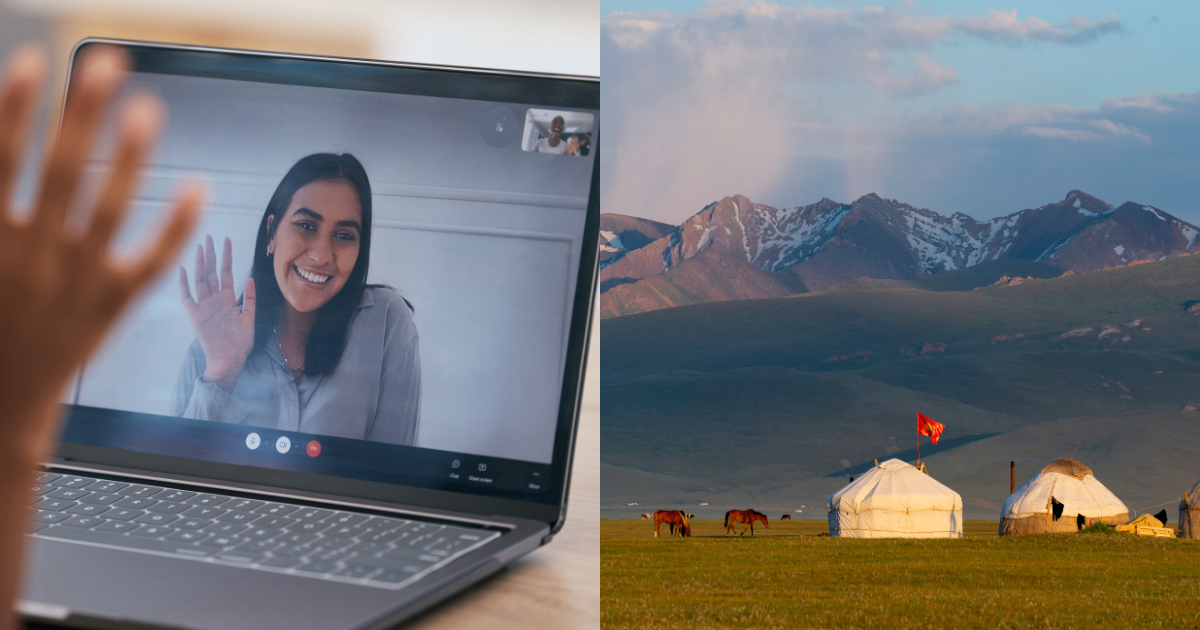
When I first received an invitation to teach an ICEA (International Childbirth Education Association) Postpartum Doula Workshop for women in Kyrgyzstan in 2024, I was both excited and uncertain as I stepped into unfamiliar challenges. The class had to be taught via Zoom, and without a translator, was limited to women who spoke English. I woke up early to start the class at 6:00 a.m. in Colorado to match their schedule, twelve hours ahead, and taught as I would in the U.S., while continually asking questions to understand how postpartum care worked within their culture.
I wondered if I was truly reaching them, but the commitment and determination they showed quickly answered that question. They completed the class and, with the help of Dr. Clementa Frederiksen, One Health Program Coordinator for CDI (Crosslink Development International), they enrolled for ICEA certification. We even arranged to have documents translated into Kyrgyz. That first experience planted a seed and marked the beginning of a deeper partnership with CDI.
CDI is a non-profit organization committed to transforming individual lives and communities through development efforts. Its One Health Program includes the Women’s Community Health Education (CHE) project, which provides evidence-based information on preventing disease, healthy eating, pregnancy health, and preparation for childbirth so women in Kyrgyzstan can care for themselves and their families. The Birth Project, another key initiative, focuses on doula development. (If you are interested in donating to these CDI projects, you’ll find options at the end of this blog.)
From Zoom to Bishkek
Fast forward a year and the invitation came again. This time with a request to teach in person! They also wanted a larger class and an interpreter.
My friend, Bonita (“Boni”) Katz, who had previously taught childbirth education and birth doula classes in Kyrgyzstan, was also planning to return in 2025. Together, we partnered with the Birth Project in Bishkek to bring three classes to the area.
Over two weeks, Boni taught birth doula and childbirth education students with her translator, while I assisted with hands-on demonstrations.
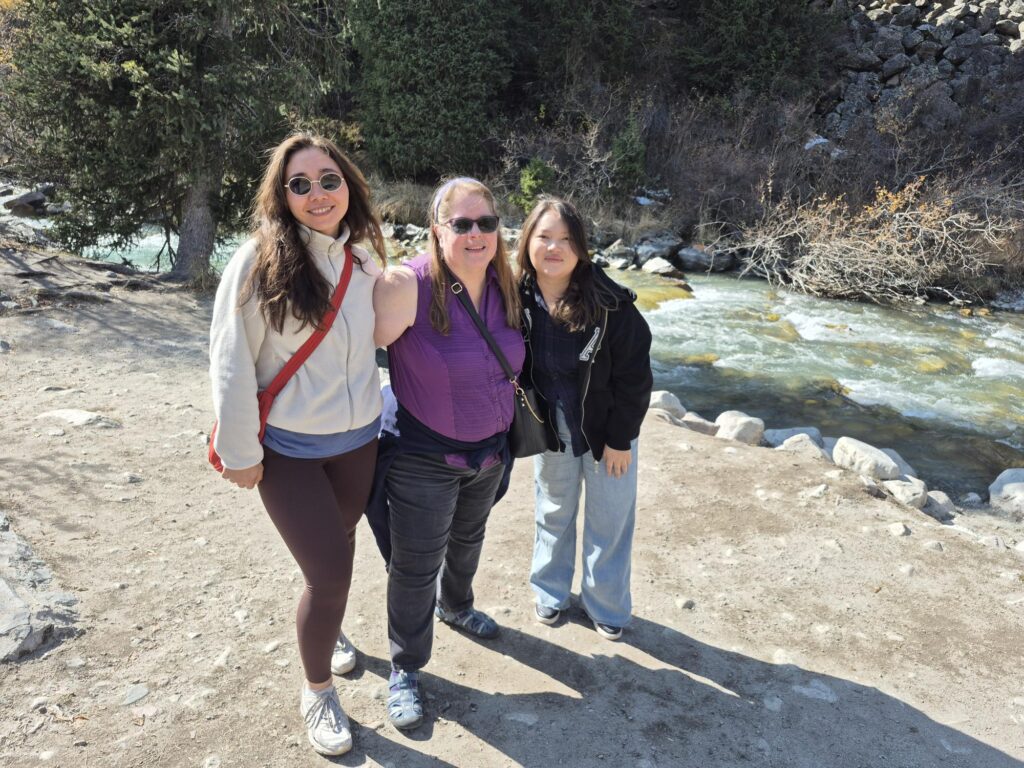
After a brief day of rest, I began a four-day postpartum doula workshop with a Kyrgyz translator. Both translators had taken my online class the year before, so reconnecting with them felt like meeting old friends.
Listening, Learning, and Adapting
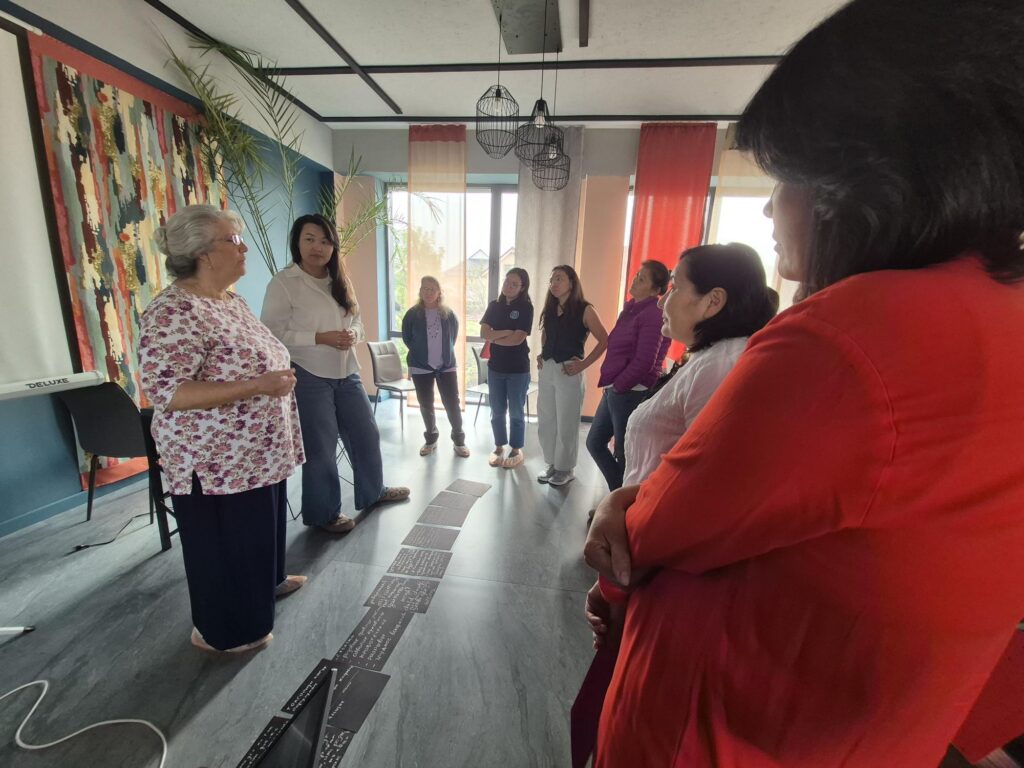
Teaching in Kyrgyzstan wasn’t just about sharing knowledge, it was about listening, learning, and adapting. I asked countless questions to make sure what I taught aligned with their reality.
For example, postpartum care is deeply rooted in tradition. Many women stay with their mother or mother-in-law for forty days after birth, a period meant for rest and learning. At the same time, I heard stories where some new mothers ended up serving the in-law’s family instead.
A ceremony, the beshik toi, would be held at 40 days, the first time that the baby was first wrapped up to be put in a juniper cradle, or beshik.
The infant would be swaddled and placed into the cradle by an old woman, with the hopes that the baby would live to be as old as her. The baby is handled for feeding and cleaning but in some families, much of their time is spend in a beshik which is rocked by family members as needed to calm the baby. They will stay much of the day in the beshik for up to a year or longer.
These conversations reminded me how different postpartum life can be across cultures, and how important it is to honor those differences while still offering meaningful support and information.
Immersed in Kyrgyz Culture
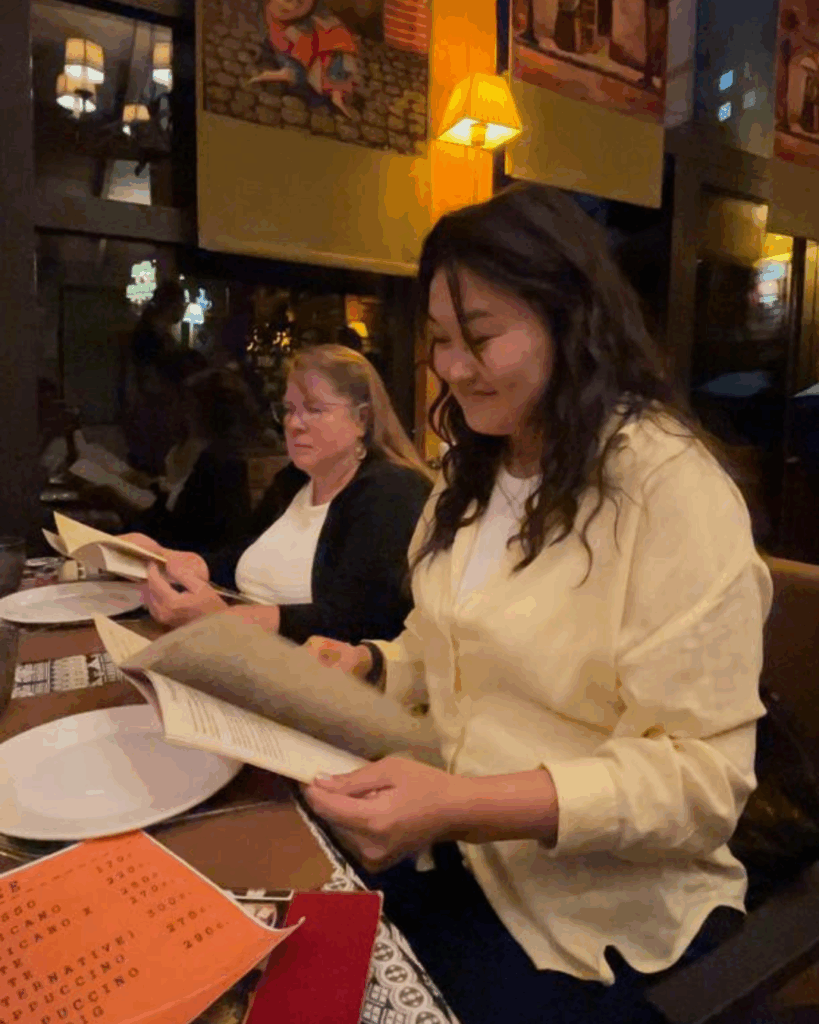
Outside the classroom, I immersed myself in the local culture, an essential part of understanding the community we hoped to serve. We stayed in a small hotel near the training facility and explored Bishkek in the evenings. Soup was a staple on every menu, and I tasted Georgian dishes, American-style meals, and even horse meat at a steakhouse— though I still prefer beef! Fresh vegetables appeared at every meal, and tea, the national beverage, replaced my usual coffee habit. Experiencing these customs deepened my appreciation for the richness of Kyrgyz life.
These everyday experiences offered more than cultural curiosity; they provided insight into daily rhythms, values, and traditions. That understanding is central to CDI’s mission because meaningful, lasting change happens when education and support are rooted in respect for local culture and lived experience.
Healthcare Realities and Hope for Change
I also learned more about their healthcare system and birth practices, which differ greatly from U.S. hospitals. Hospitals in Kyrgyzstan are predominately state-run, and partners or doulas are generally not allowed in the birth room. Mothers often labor alone, in the room of other laboring mothers, and fear is common.
In a typical birth, moms are encouraged to come to the hospital early. They stay in rooms with exam-table-style beds and little other furniture, and they are not supposed to lie down until it is time for an exam or for birth. There are no nurses; midwives check on mothers during labor now and then, and doctors arrive when it comes time to push. It is permissible for the midwife to catch the baby if needed.
The providers limit women to 1 hour of pushing so they are aggressively encouraged to push, and 2 other attendants will push on their stomach (fundal pressure) to move the baby down. Women are usually in a lithotomy position on an exam table type bed. If that doesn’t work, a cesarean is performed.
Most mothers are pretty terrified of birth because it is unknown with little or no education, only stories from their family and friends to go by. I was told by many of the students that women start screaming when they first arrive and don’t stop until the baby is born, even between contractions, due to fear. Since they are alone, no one is there to soothe them.
One of my students and translators, Saltanat, shared her own experience:
“Aaron (3 years old now) was born in a public hospital, but we made an agreement with the doctor so that Sultan (her husband) could attend. (Partners and doulas are usually not permitted to attend.) He was there during my labour and actively participated. Usually, people don’t pay in public hospitals, but if you want things to go according to plan and to have an “experienced” doctor, it’s common to make a special arrangement.
I stayed for two days instead of the usual three because there was no air conditioning. Those days were extremely hot, around 45 to almost 50°C, and the only AC was in the corridor. Because of that, Aaron couldn’t sleep well at night, and I often had to walk in the corridor where it was a bit cooler.
From the very beginning, Aaron stayed with me. Normally, hospitals provide a separate cradle for babies, but most mothers sleep with their babies in the same bed because it’s easier, so I did too. I shared a room with five other women, and the hospital really needed renovation. They were planning to do it because there were cockroaches everywhere, and it wasn’t easy to leave food out.
After giving birth, mothers are moved to another room for the rest of their stay. Doctors and midwives check on us a few times a day. The midwife presses on the belly to help remove fluids and checks how much blood we’re losing, while the pediatrician examines the baby’s temperature and general condition. On the second day, babies usually get their first vaccination, which is one reason mothers stay a few days.
The hospital provided food, but it was very simple, mostly soup and tea. There isn’t much education for mothers before birth, but when we go home, they remind us to take vitamins, check our own and the baby’s temperature daily, and return if there’s heavy bleeding.
Honestly, I didn’t feel ready to go home with a newborn. I felt overwhelmed and a bit scared. My mom and husband were both working full-time, so during the day I had to manage everything myself. In the evenings, they helped; my husband would hold the baby while I took a shower.
At first, I stayed with my mom and younger sister, while my husband was living in another rented house. After about five days, I asked him to move in with us, it just made more sense. The first few nights were really hard. It was just the three of us—my mom, my husband, and me. My mother-in-law lives in another city, so she came only when Aaron was about two months old.”
A Meaningful Step Toward Systemic Change
One of the most significant moments of our time in Kyrgyzstan came during a meeting with the Minister of Health. While he confirmed that partners—including doulas—are not currently allowed in either public or private hospitals, the conversation didn’t end there.
Instead, he encouraged CDI to host a conference for doctors and midwives to learn more about doulas and their role in supporting birthing families. While this may seem like a small step, it represents something much larger: an opening for dialogue, education, and the possibility of change within the healthcare system itself.
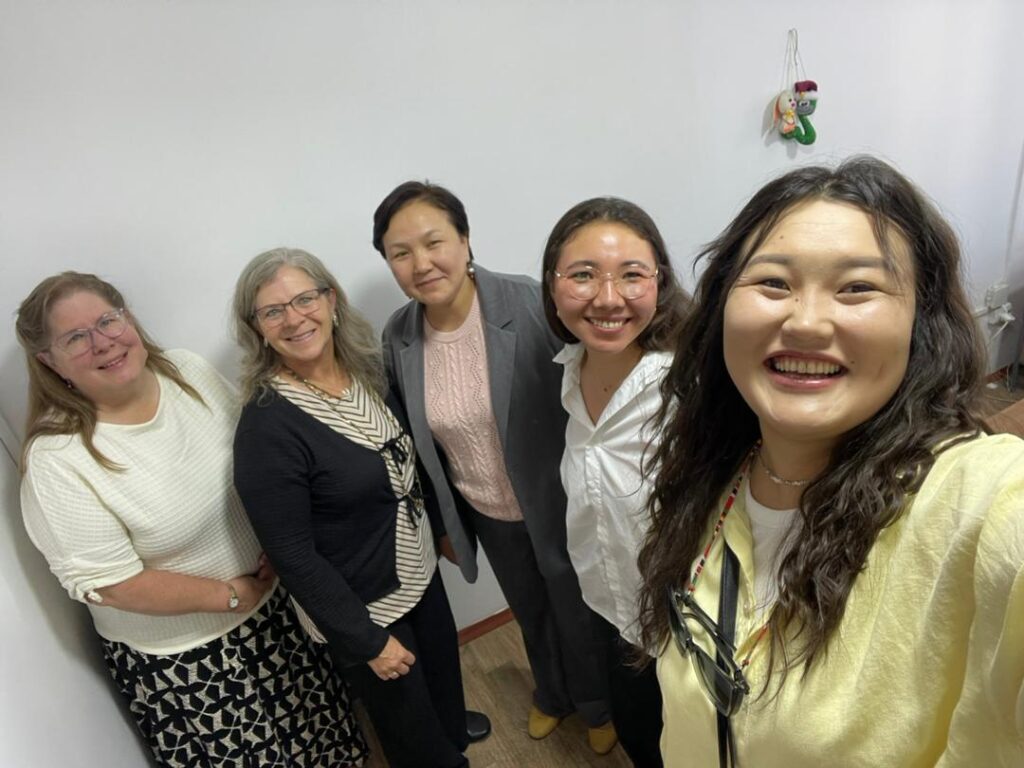
Meeting with the Minister of Health during our stay gave me hope; though he confirmed that no partner (including doulas) was allowed in the private hospitals. He suggested that CDI hold a conference to educate doctors and midwives about doulas—a small but meaningful step toward change.
Looking Ahead
There was a midwife in the full series of classes that Boni and I taught. She came at the last minute because she had witnessed a doula attended birth at one of the few private hospitals the day before we started, and she could not believe her eyes. She was an eager learner!
As I boarded my flight home, I felt a deep sense of accomplishment. We had done more than teach; we had started conversations that could transform care for mothers and babies. Kyrgyzstan left me curious, inspired, and eager to return. There is still so much to learn, and so much more we can do together.
Donation Opportunities:
If you want to be part of this story, please consider donating to either of these causes (or both):
Community Health Education (CHE): Pregnancy Health & Birth Education
The Community Health Education (CHE) Project provides pregnancy and birth education training to village nurses and midwives in remote regions of Kyrgyzstan, including the underserved Ak Talaa area. Nurses and midwives from multiple villages are equipped with essential skills and then coached as they bring this education directly to pregnant women in their communities.
This ongoing program includes a cycle of in‑person training, followed by several weeks of guided mentorship as participants begin teaching locally. Many of these trainees are ICCE students previously taught by Boni Katz, now confidently using their training to improve maternal health in their villages.
In addition to their work in rural regions, CHE educators also serve at a prenatal clinic in Bishkek and continue to support several other community‑focused health initiatives across the country.
The CHE Project in Ak Talaa remains underfunded. Donors who are passionate about birth education, maternal health, and training local healthcare providers in rural communities can make a meaningful impact by supporting this effort. All funds are in USD and are withdrawn via PayPal for CDI USA NGO.
Birth Project: Doula Development
The Birth Project focuses on educating, preparing, and supporting our ICEA candidates along with certified birth and postpartum doulas. While the project also supports birth educators, its primary emphasis is on developing high-quality doula care in Kyrgyzstan.
Donors who give to the Birth Project can help:
- Fund a conference for Kyrgyz doctors and midwives to increase understanding and acceptance of doula care.
- Support the launch of the Association of Doulas of Kyrgyzstan.
- Contribute to building and maintaining a national doula website.
- Help with the translation of doula training materials and other educational resources.
All contributions directly strengthen doula services across the country.
Funds are in USD and withdrawn via PayPal through CDI USA NGO.


